How to Work Smarter, Not Harder: 7 Business Tasks You Should Automate Today
Introduction
As a business grows, so does the number of tasks that need attention.
Responding to inquiries. Sending follow-up emails. Confirming appointments. Updating customer records. Checking in with leads.
Individually, these tasks may only take a few minutes. But over the course of a week, they can consume hours of valuable time—time that could be spent serving clients, developing new ideas, or growing your business.
Many business owners assume working harder is the answer. In reality, sustainable growth often comes from working smarter.
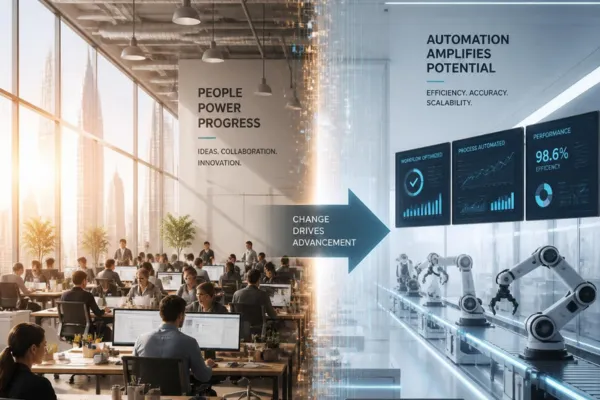
Business automation isn't about replacing people. It's about reducing repetitive work so your team can focus on higher-value activities that require creativity, expertise, and personal connection.
The good news is that you don't need to automate everything at once. Starting with a few high-impact tasks can significantly improve productivity and create a smoother experience for both your team and your customers.
In this guide, we'll explore seven common business tasks that are ideal candidates for automation and explain how they can help your business become more efficient.
Why Automation Matters
Every repetitive task takes time.
When those tasks are performed manually every day, they gradually reduce your team's capacity to focus on strategic work.
Automation helps businesses:
save time
reduce human error
improve consistency
respond faster
create better customer experiences
support business growth
Rather than adding more hours to the workday, automation helps businesses make better use of the hours they already have.
1. Lead Response

The first few minutes after someone contacts your business are often the most important.
A delayed response can cause potential customers to lose interest or contact a competitor.
Automating an initial response ensures every lead receives:
confirmation that their inquiry was received
an estimated response time
helpful next steps
a professional first impression
Your team can then continue the conversation personally when appropriate.
2. Appointment Confirmations and Reminders
Missed appointments create scheduling gaps and lost opportunities.
Automated confirmations and reminder messages help customers remember upcoming appointments while reducing administrative work for your team.
A simple reminder sent 24 hours before a meeting can significantly improve attendance.
3. Follow-Up Communication
Many sales opportunities are lost simply because businesses stop following up.
Automation allows you to schedule:
thank-you emails
educational resources
consultation reminders
follow-up messages
re-engagement campaigns
Consistent communication keeps your business top of mind without requiring manual effort.
4. Customer Onboarding
The first experience after a customer says "yes" sets the tone for the relationship.
Instead of sending onboarding information manually every time, businesses can automate:
welcome emails
account setup instructions
scheduling links
onboarding checklists
frequently asked questions
This creates a more professional and consistent experience.
5. Review Requests
Happy customers are often willing to leave a review—but they may simply forget.
Automating review requests after a completed project or appointment helps businesses build credibility while requiring little additional effort.
6. Internal Team Notifications
Automation isn't just for customers.
It can also improve internal operations.
For example, your team can receive automatic notifications when:
a new lead submits a form
an appointment is booked
a payment is received
a proposal is accepted
This reduces communication delays and keeps everyone aligned.
7. Routine Administrative Tasks
Administrative work often includes repetitive actions such as:
updating customer records
assigning tasks
organizing contacts
changing pipeline stages
Automating these routine processes reduces manual data entry and minimizes the risk of errors.
How to Decide What to Automate First
Not every task should be automated immediately.
Start by identifying activities that are:
repetitive
time-consuming
consistent
rule-based
performed frequently
These tasks typically provide the greatest return on investment when automated.
Real-World Business Example
Imagine a growing marketing agency that receives dozens of inquiries each week.
Previously, every lead required manual responses, appointment scheduling, reminder emails, and onboarding.
As the agency grew, these administrative tasks consumed more time than client work.
By implementing automation, the agency created workflows that handled routine communication automatically while allowing the team to focus on strategy, creative work, and customer relationships.
The result wasn't just time savings—it was a smoother, more consistent client experience.
Best Practices for Business Automation

✔ Start with one workflow at a time
✔ Keep your automation simple
✔ Review workflows regularly
✔ Personalize automated messages when possible
✔ Continue providing human support where it matters most
Common Mistakes to Avoid
❌ Trying to automate every process immediately
❌ Sending generic, impersonal messages
❌ Ignoring workflow testing
❌ Creating overly complex automation
❌ Forgetting to review and improve workflows
Expert Insight
The most productive businesses aren't necessarily the busiest.
They're the ones that have intentionally removed unnecessary manual work from their daily operations.
Automation doesn't replace relationships—it creates more time to build them.
By allowing technology to handle routine tasks, businesses can devote more attention to innovation, customer service, and long-term growth.
Conclusion
Working smarter isn't about doing less—it's about doing the right work.
Automating repetitive tasks helps businesses improve efficiency, reduce errors, respond faster, and create a better experience for both customers and employees.
Whether you're just beginning your automation journey or looking to optimize existing processes, starting with a few high-impact tasks can make a meaningful difference.
HighLevel Stream helps businesses simplify daily operations by bringing automation, CRM, communication, and workflow management together in one connected platform.
If you're wondering which tasks in your business could be automated first, HighLevel Stream can help you identify opportunities to save time, improve consistency, and build workflows that support your long-term growth.
